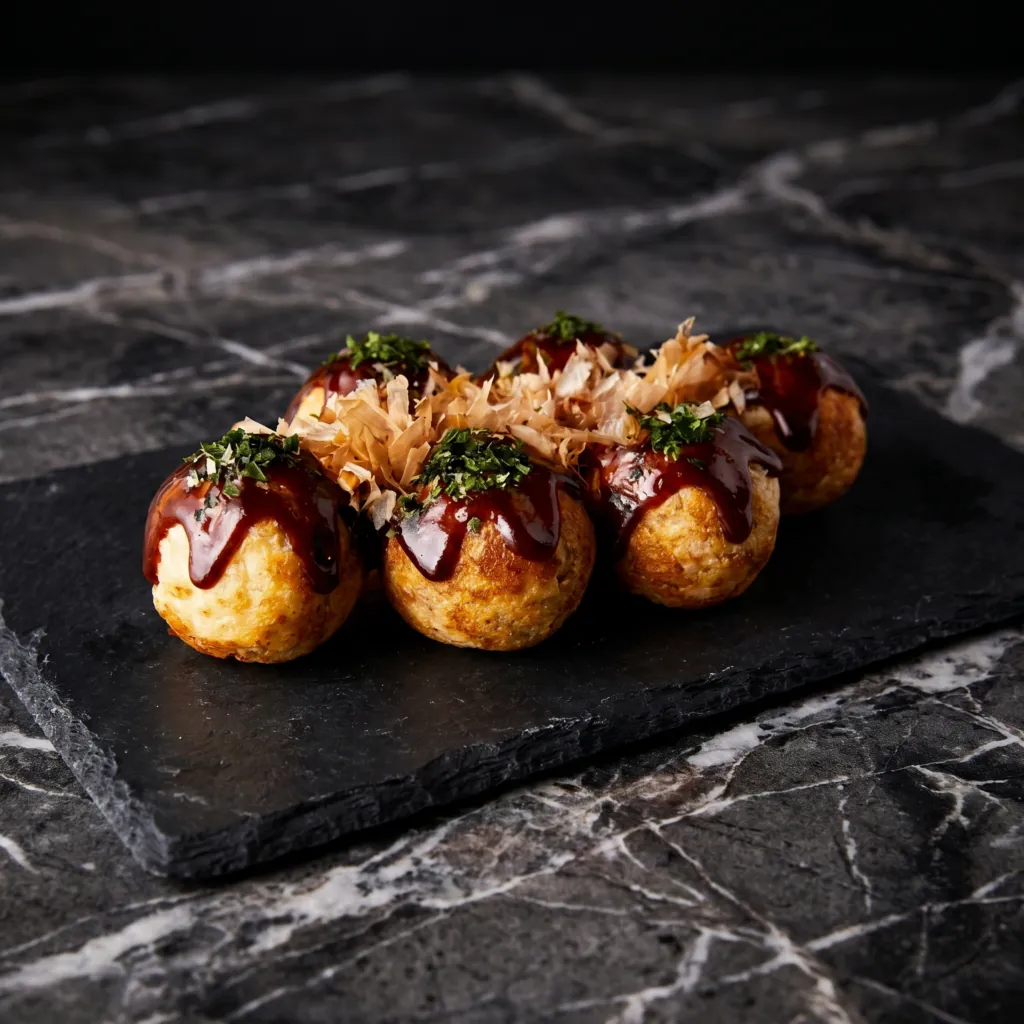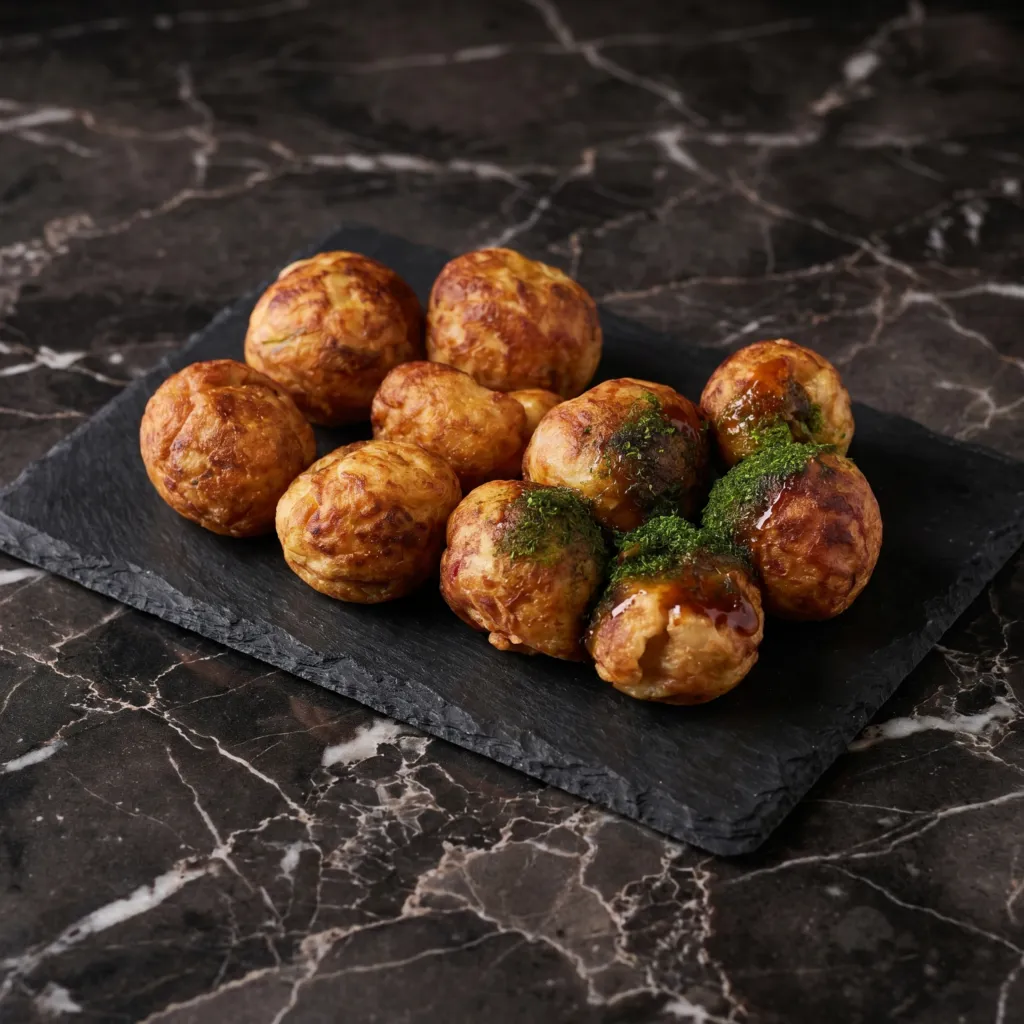
Takoyaki (たこ焼き) translates to “octopus fried” — but that doesn’t capture the magic. These golden spheres from Osaka are crispy and brown on the outside, soft and almost molten on the inside, with a tender piece of octopus in the center. They’re cooked in a special cast-iron pan with semi-spherical molds, then turned repeatedly until perfectly round. Topped with sweet-salty takoyaki sauce, creamy Japanese mayonnaise, dancing bonito flakes, and green seaweed powder, they’re pure street food joy. Yes, you need the pan. No, you won’t regret buying it.
The Science of the Custardy Interior & Why You Need Dashi
Takoyaki’s unique texture comes from a batter that’s much thinner and wetter than pancake batter. The high liquid content (dashi, eggs, flour) creates steam as it cooks, which puffs up the balls and leaves the inside soft and almost pudding-like. The dashi is non-negotiable — it’s a Japanese stock made from kombu (kelp) and bonito flakes. Dashi provides umami and a subtle oceanic flavor that defines authentic takoyaki. Water or plain broth will not work. The cooking method is a low-and-slow rotation. Unlike pancakes that you flip once, takoyaki requires constant turning over 5–7 minutes. This repeated rotation creates the round shape while the exterior sets into a crisp shell and the interior remains custardy. The octopus is parcooked before adding — raw octopus would release water into the batter and make the inside soggy.
Instructions
Make the Dashi (if not using instant)
If using instant dashi powder, dissolve 1 teaspoon powder in 2 cups hot water. If making from scratch, simmer a 4-inch piece of kombu in 2 cups water (don’t boil), remove kombu, add a handful of bonito flakes, steep for 5 minutes, then strain. Set aside to cool slightly.
Make the Batter
In a large bowl, whisk together the flour, dashi, eggs, soy sauce, and salt until smooth. The batter should be thin and runny—thinner than pancake batter. Let it rest for 15–20 minutes. This allows the flour to hydrate fully and reduces lumps.
Prep the Fillings
Finely chop the green onions and pickled ginger. Cut the cooked octopus into small, bite-sized chunks (about ½ inch). Keep each filling in separate small bowls near the stove.
Heat the Takoyaki Pan
Place the takoyaki pan over medium heat. Generously brush each semi-spherical mold with vegetable oil, including the flat surface between molds. Heat until the oil shimmers—a drop of batter should sizzle immediately.
Fill the Molds
Pour the batter into a measuring cup with a spout for easy pouring. Fill each mold completely to the brim—the batter will overflow slightly. This is correct. Working quickly, drop 1–2 pieces of octopus into each mold, followed by a sprinkle of green onions and pickled ginger.
The First Turn (30–45 seconds)
After 30–45 seconds, the bottom of each ball will have set and turned golden-brown. Using a takoyaki pick or bamboo skewer, drag the excess batter from between the molds into each ball, then turn each ball 90 degrees. The uncooked batter will spill out—this becomes the next side. Don’t worry about perfection yet.
Continue Turning (Every 30 seconds)
Over the next 5–7 minutes, keep turning each ball every 30–45 seconds. Use two picks for better control. The balls will gradually become round as the batter cooks and sets. Add small drizzles of extra batter into any holes or gaps. The outside should become deep golden-brown and crisp, while the inside stays soft.
Final Crisping
Once the balls are perfectly round and uniformly golden-brown (about 6–8 minutes total), brush a tiny amount of oil over them and let them cook for another 30 seconds to crisp the exterior.
Sauce and Serve
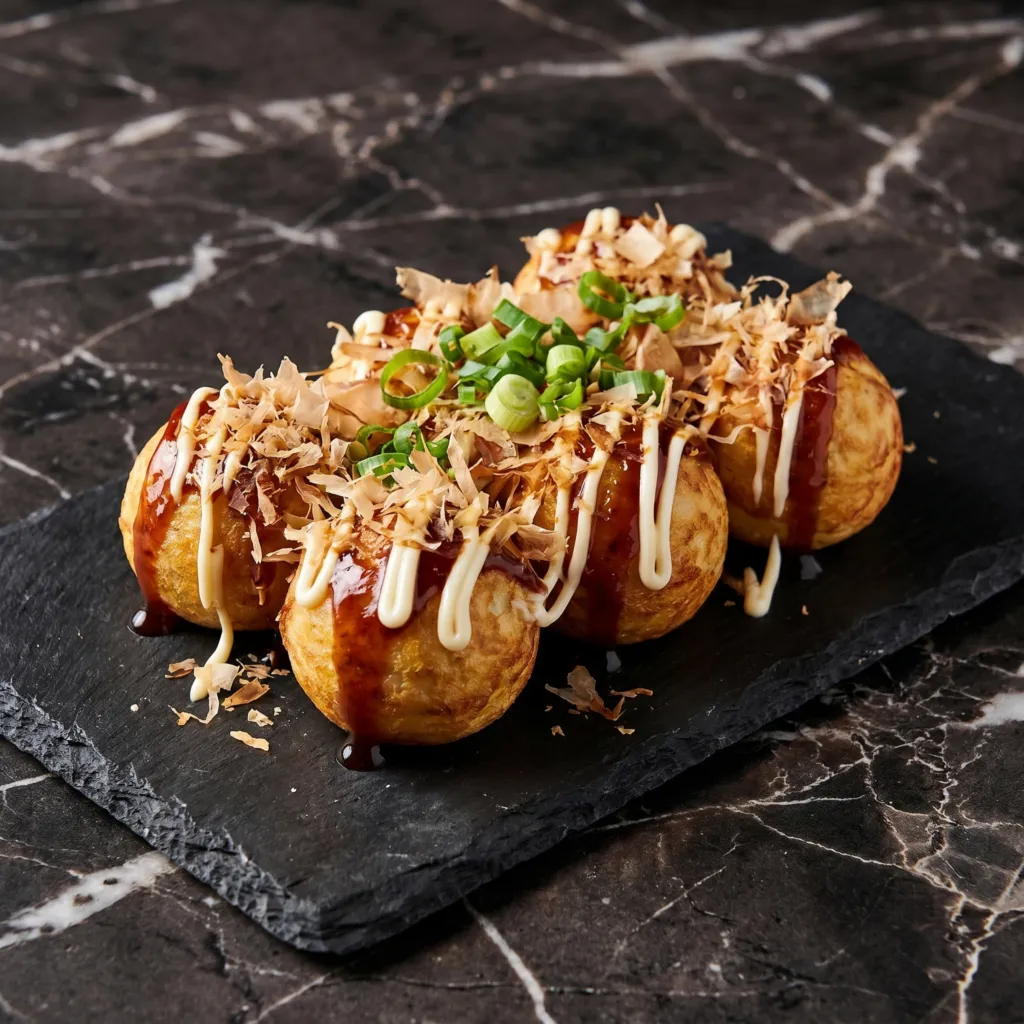
Transfer the takoyaki to a plate. Drizzle generously with takoyaki sauce (dark brown, sweet-savory), then zigzag with Japanese mayonnaise. Sprinkle with aonori (green seaweed powder) and a generous handful of bonito flakes—they will dance and move from the heat. Top with extra pickled ginger if desired. Serve immediately with toothpicks or small forks.
Pro-Tips for Takoyaki Perfection
- Dashi is essential: Do not substitute water or chicken broth. Dashi’s umami is what makes takoyaki taste like takoyaki. Instant dashi powder (hondashi) is fine and widely available at Asian grocery stores or online.
- Cooked octopus only: Buy pre-cooked octopus at Japanese or Korean markets. Boil raw octopus for 20–30 minutes until tender, then cool before cutting.
- Rest the batter: Those 15–20 minutes allow the gluten to relax and the flour to hydrate, resulting in a softer interior.
- Don’t be afraid of overflow: Overfilling the molds is correct. The excess batter becomes the material you use to build the round shape during turning.
- Use two turning picks: One pick is frustrating. Two picks give you control to rotate each ball smoothly.
- Low and slow heat: Medium heat is ideal. Too high and the outside burns before the inside sets. Too low and the balls become dense and greasy.
- Kewpie mayonnaise is worth it: Japanese mayonnaise has a different flavor (more egg yolk, MSG, and rice vinegar) that pairs perfectly with takoyaki. American mayo is not the same.
- Bonito flakes dance: The heat from the takoyaki makes the paper-thin bonito flakes curl and move. This is not a defect—it’s the visual signature of the dish.
- Leftover batter: Use extra batter to make okonomiyaki or Japanese pancakes. The first few takoyaki will be ugly. By the end of the batch, you’ll be a pro. This is the taste of Osaka festivals, and now it’s your kitchen.