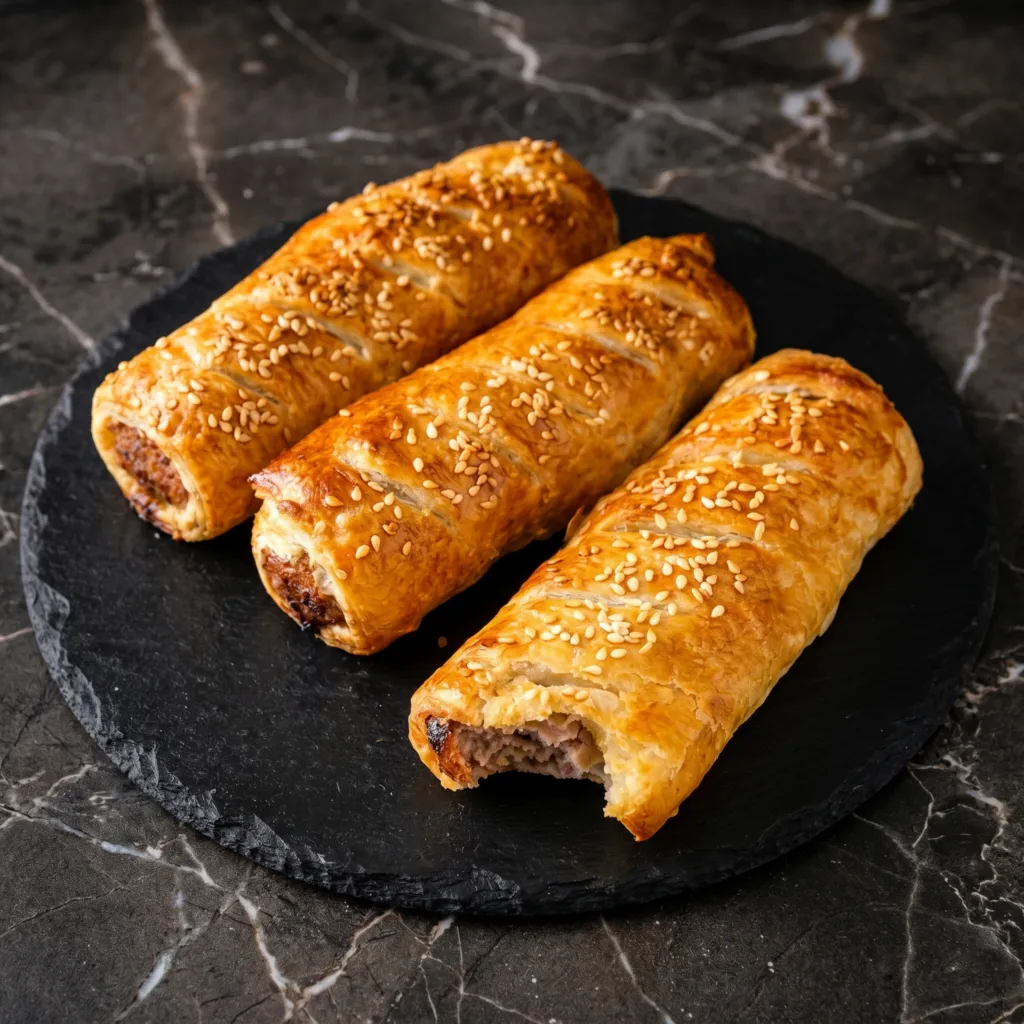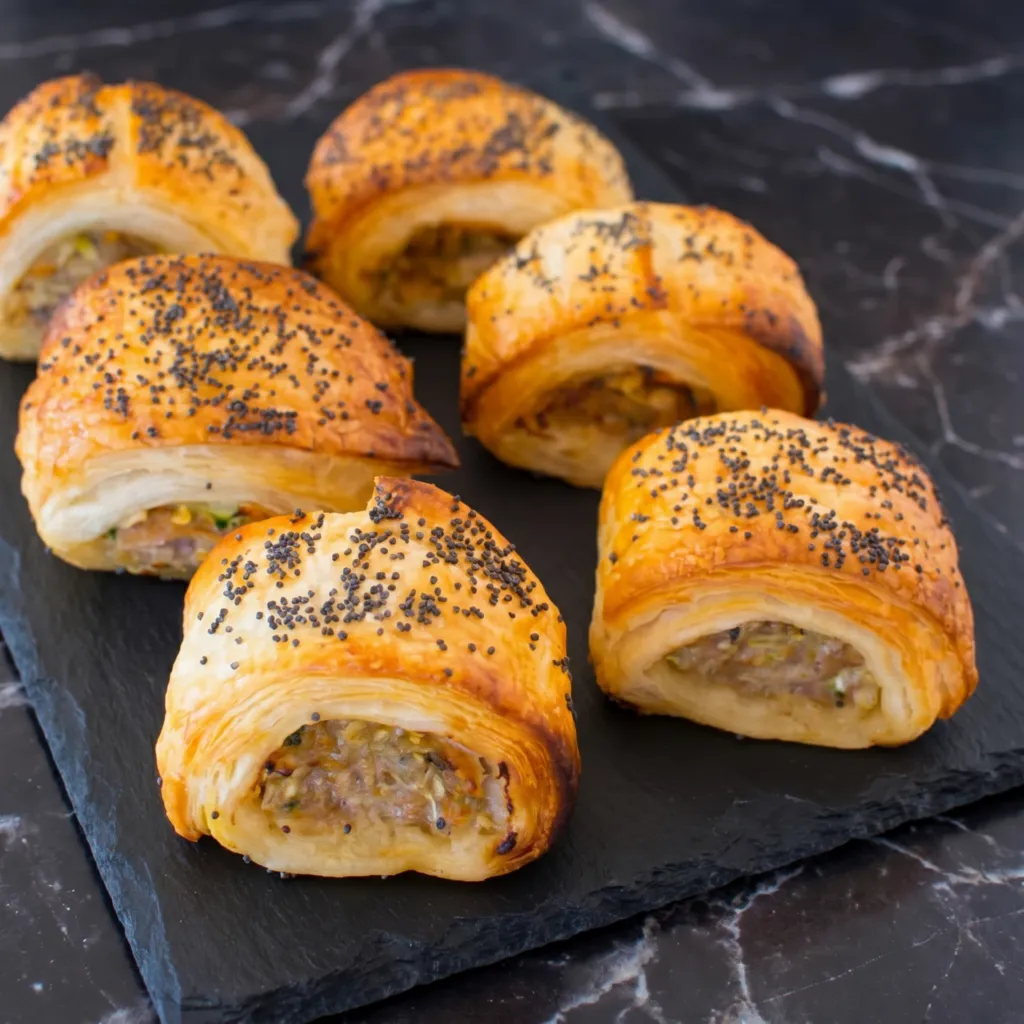
Sausage rolls are exactly what they sound like—sausage meat wrapped in buttery puff pastry—but they’re so much more than the sum of their parts. The pastry is golden, flaky, and shatteringly crisp. The filling is juicy, savory, and seasoned with herbs, onion, and a hint of spice. They’re a staple of Australian and British bakeries, and once you’ve made them at home, you’ll never buy frozen ones again. The best part? They’re incredibly easy. Store-bought puff pastry does the heavy lifting. You just mix the filling, roll, slice, egg wash, and bake.
The Science of Puff Pastry & Why You Need Breadcrumbs in Sausage Meat
Puff pastry rises because of layers of butter trapped between layers of dough. When the pastry hits the hot oven, the water in the butter turns to steam, forcing the layers apart and creating hundreds of flaky, airy sheets. This is why you should keep the pastry cold until it goes into the oven—if the butter melts before baking, the layers collapse and you get dense, greasy pastry, not flaky pastry. The sausage filling needs breadcrumbs (or panko) for a specific reason: they absorb excess moisture and fat from the meat as it cooks, preventing the filling from shrinking away from the pastry or making the bottom soggy. Breadcrumbs also lighten the texture, keeping the sausage roll juicy but not dense. Egg wash isn’t just for color—it helps the pastry seal at the seam and creates a glossy, golden-brown finish.
Instructions
Preheat the Oven
Preheat your oven to 400°F (200°C). Line a baking sheet with parchment paper.
Make the Sausage Filling
In a large bowl, combine the ground pork, breadcrumbs, finely chopped onion, minced garlic, thyme, rosemary, fennel seeds (if using), salt, pepper, nutmeg, and the egg. Mix with your hands until everything is evenly combined. Do not overmix—overworking makes the filling dense. The mixture should be moist but hold its shape when pressed.
Roll the Filling into Logs
On a lightly floured surface or piece of plastic wrap, divide the filling into 2 equal portions. Roll each portion into a log about 12 inches (30 cm) long, roughly the same length as your puff pastry sheet. Set aside.
Prepare the Puff Pastry
Unroll the puff pastry sheet on a lightly floured surface. If it comes folded, gently roll it out to smooth the creases. Cut the pastry lengthwise into 2 long rectangles (each about 12 x 4 inches / 30 x 10 cm).
Assemble the Sausage Rolls
Place one sausage filling log along the center of each pastry rectangle. Brush one long edge of the pastry with water (this helps the seal stick). Fold the pastry over the filling, enclosing it completely. Press the seam firmly to seal. You should have a long, filled pastry log. Repeat with the second rectangle.
Crimp and Slice
Use a fork to press along the sealed seam for a decorative edge (optional). Place the logs seam-side down on the prepared baking sheet. Using a sharp knife, score or slice each log into 4–6 equal pieces (about 2–3 inches / 5–7 cm each). Do not separate them completely—just cut through the pastry so they’re easy to break apart after baking.
Egg Wash and Top
In a small bowl, whisk together the egg and milk or water. Brush the egg wash generously over the top and sides of each sausage roll (avoid the cut sides if you want them to puff more). Sprinkle with sesame seeds or poppy seeds if desired.
Bake
Bake for 20–25 minutes until the pastry is deep golden-brown, puffed, and flaky, and the filling is cooked through (internal temperature of 165°F / 74°C). Rotate the baking sheet halfway through for even browning.
Serve
Let the sausage rolls cool on the baking sheet for 5 minutes. Break them apart along the scored lines. Transfer to a serving platter. Serve warm or at room temperature with tomato chutney, ketchup, or HP sauce on the side.
Pro-Tips for Sausage Roll Greatness
- Keep the puff pastry cold: Warm pastry is sticky and hard to work with, and the butter can melt before baking. If the pastry gets soft, pop it in the fridge for 10 minutes.
- Don’t overmix the filling: Mix just until combined. Overworked sausage meat becomes dense and rubbery instead of tender and juicy.
- Grate the onion: Finely grated onion melts into the filling, adding moisture and flavor without chunks.
- Use all-butter puff pastry: The flavor is vastly superior to margarine-based pastry. Look for brands like Dufour or Pepperidge Farm.
- Seal the seam well: A poorly sealed sausage roll will burst open in the oven, leaking fat and making a mess. Press firmly, then crimp with a fork.
- Seam-side down: Placing the rolls seam-side down keeps them closed during baking and creates a smoother top.
- Score, don’t separate: Cutting through the pastry before baking (but leaving the rolls attached) gives you clean, even slices while keeping the pastry edges from drying out.
- Freeze for later: Assemble uncooked sausage rolls on a parchment-lined baking sheet and freeze until solid. Transfer to a freezer bag. Bake from frozen—add 8–10 minutes to the baking time.
- Make mini sausage rolls: Use the same recipe but cut the pastry into 3 narrower strips and make bite-sized rolls (about 1.5 inches long). Bake for 15–18 minutes.
- Add cheese or apple: Grate some sharp cheddar into the filling or add finely chopped apple for a sweet-savory twist. These sausage rolls are dangerously good. Make a double batch—one for now, one for the freezer. You’ll thank yourself later.