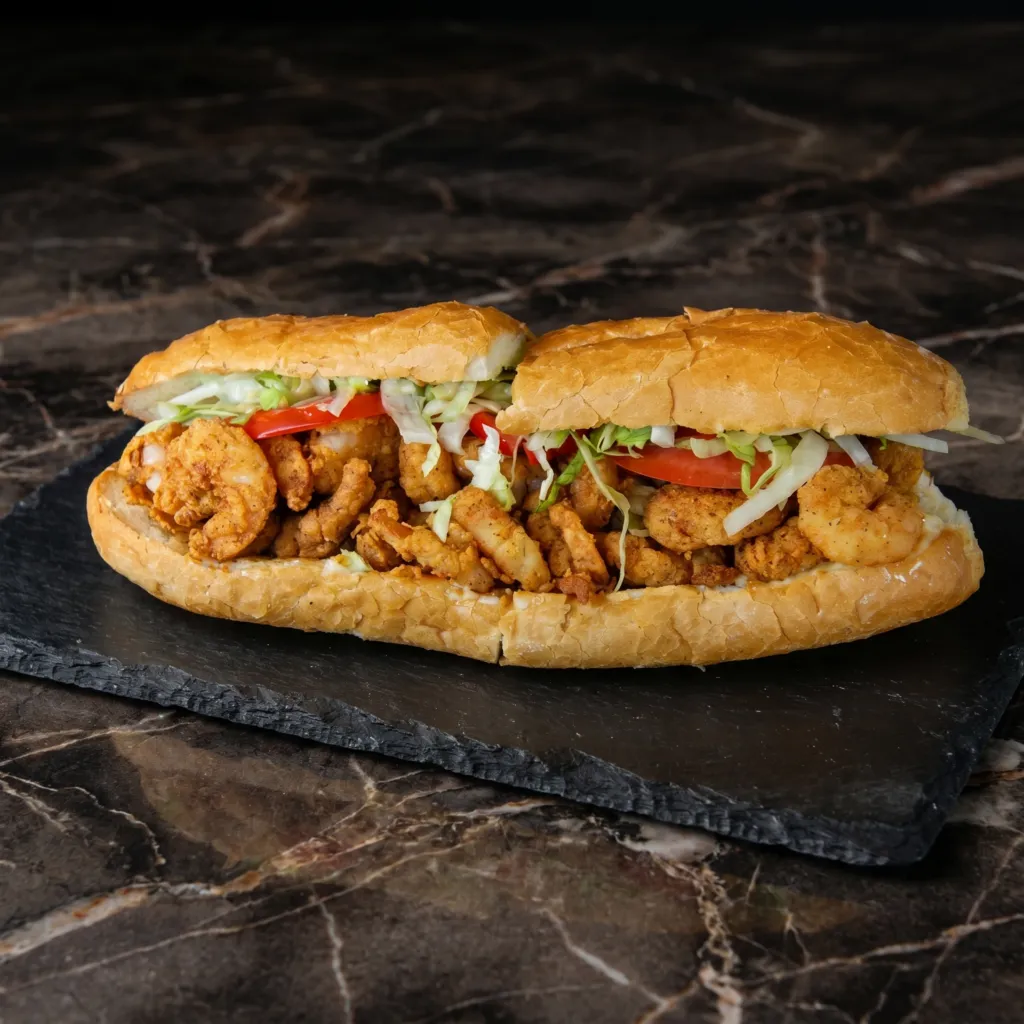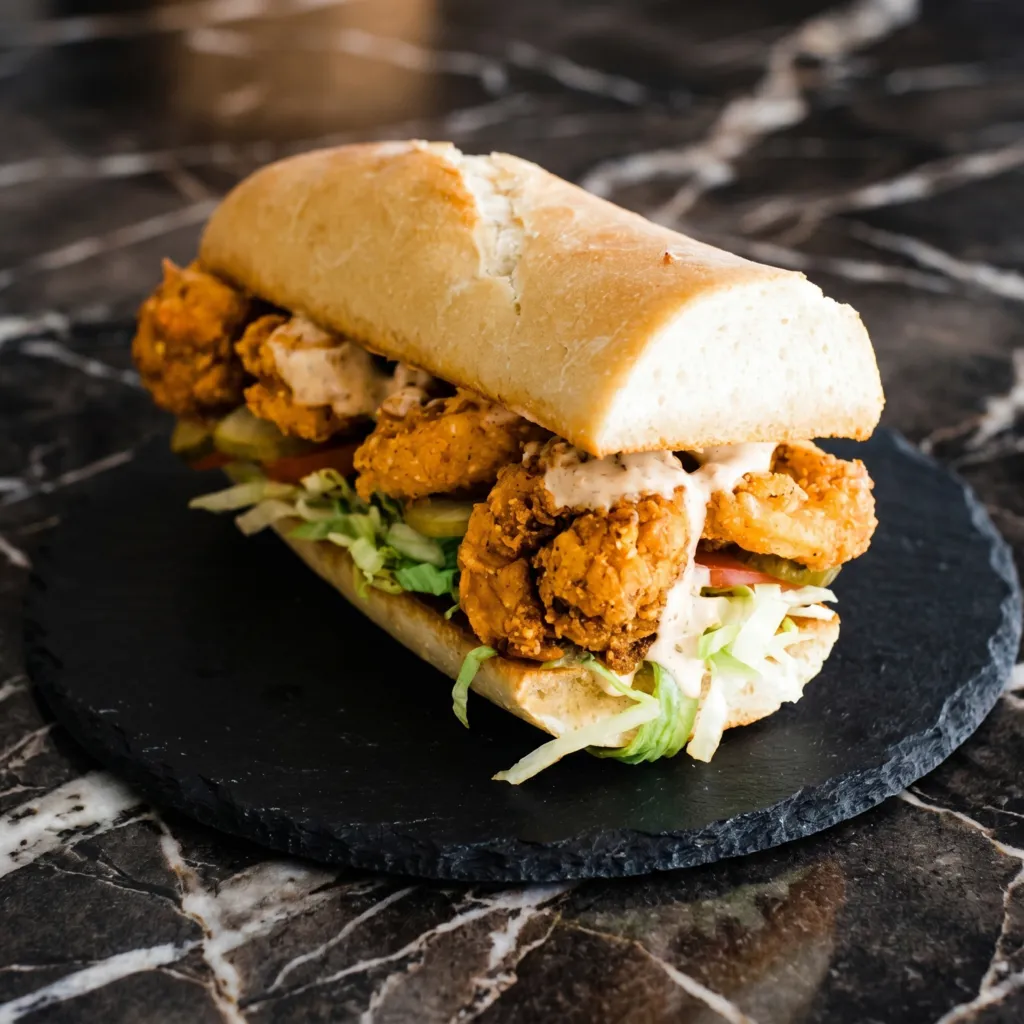
The Po’ Boy (short for “poor boy”) was born in New Orleans during a 1929 streetcar strike, when former streetcar drivers turned sandwich makers served fried oyster sandwiches to their striking colleagues for free. Today, it’s Louisiana’s most famous sandwich—and for good reason. A perfectly fried seafood filling (shrimp, oysters, or catfish) tucked into crusty-yet-soft French bread, dressed with lettuce, tomato, pickles, and a tangy, spicy remoulade sauce. It’s crunchy, creamy, briny, and completely unforgettable. This recipe delivers the real deal at home.
The Science of a Shatter-Crisp Crust That Stays Put & The Bread Factor
The Po’ Boy’s signature crunch comes from a wet-dry-wet dredging station: first seasoned flour, then an egg-milk wash, then a cornmeal-and-flour mixture. The cornmeal is the secret weapon—its irregular, granular particles create a jagged, craggy surface that gets maximally crispy in hot oil. Unlike a smooth flour-only coating, cornmeal stays crunchy longer, even under the moisture of the remoulade and tomato juices. The bread is equally important. A true Po’ Boy uses New Orleans-style French bread—crisp and flaky on the outside, but light and airy inside, not dense like a baguette. If you can’t find it, a soft hoagie roll or Italian bread works, but avoid anything too chewy. The bread should compress slightly when bitten, not fight back. The “dressed” toppings (lettuce, tomato, pickle, sauce) aren’t just garnish—they provide coolness, acidity, and moisture that balance the rich, fried seafood.
Instructions
Make the Remoulade Sauce
In a small bowl, whisk together the mayonnaise, Creole mustard, hot sauce, ketchup, paprika, minced garlic, horseradish (if using), and lemon juice until smooth. The sauce should be pale pink, creamy, and tangy. Refrigerate until ready to use. Can be made up to 3 days ahead.
Set Up the Dredging Station
Prepare three shallow bowls. Bowl 1: Mix ½ cup flour, 1 teaspoon Cajun seasoning, ½ teaspoon salt, and ¼ teaspoon pepper. Bowl 2: Whisk together the eggs and milk until smooth. Bowl 3: Mix 1 cup cornmeal, ½ cup flour, and 1 additional teaspoon Cajun seasoning. Line a plate or wire rack at the end for the dredged shrimp.
Dredge the Shrimp
Pat the shrimp completely dry with paper towels. Working one at a time, dredge each shrimp in the seasoned flour (Bowl 1), shaking off excess. Then dip into the egg wash (Bowl 2), letting excess drip off. Finally, coat in the cornmeal mixture (Bowl 3), pressing gently to adhere. Place on a wire rack. Repeat with all shrimp. Let the coated shrimp rest for 10 minutes—this helps the coating set.
Heat the Oil
Pour vegetable oil into a heavy-bottomed pot or Dutch oven to a depth of about 2 inches (5 cm). Heat to 350°F (175°C). Use a deep-fry thermometer. No thermometer? A pinch of flour dropped in should sizzle immediately.
Fry the Shrimp
Carefully add the shrimp to the hot oil in batches (do not overcrowd). Fry for 2–3 minutes until golden-brown and crisp. The shrimp should float and the coating should be dark golden. Remove with a slotted spoon and drain on a wire rack (not paper towels—paper towels trap steam). Repeat with remaining shrimp.
Prep the Bread
While the shrimp fry, slice the French bread loaf lengthwise, but not all the way through—leave one side hinged like a book. Open it up. If desired, toast the inside of the bread under a broiler for 1–2 minutes until lightly crisp. This helps prevent sogginess.
Dress the Bread
Spread a generous amount of remoulade sauce on both sides of the inside of the bread. On the bottom half, layer the shredded lettuce, tomato slices, and pickle slices. The lettuce acts as a moisture barrier between the hot shrimp and the bread.
Pile on the Shrimp
Arrange the hot, crispy fried shrimp on top of the dressed vegetables. The shrimp should be mounded high—this is a Po’ Boy, not a skinny sandwich. Drizzle with a little more remoulade if desired.
Close, Press, and Serve
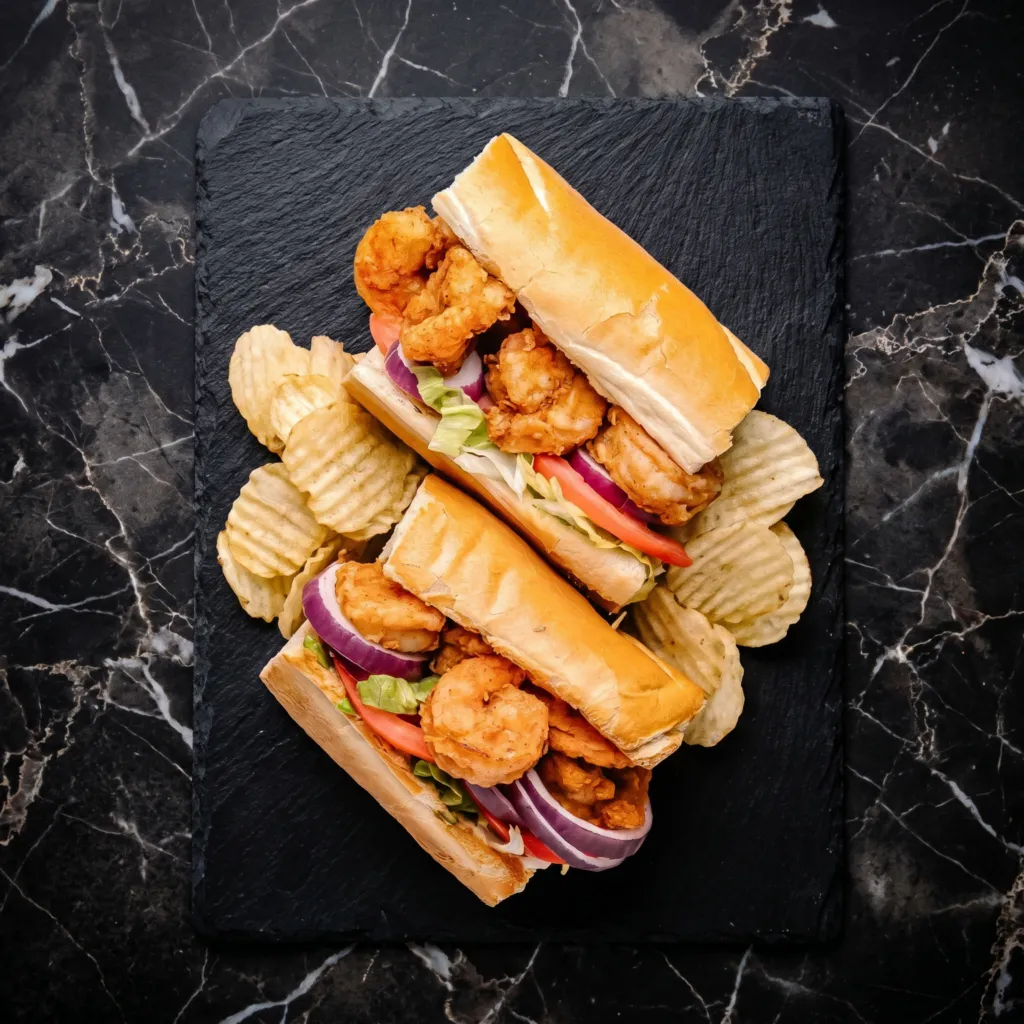
Close the sandwich gently, pressing down slightly so the bread compresses around the fillings. Slice diagonally into two or three pieces. Serve immediately with extra hot sauce on the side. Eat with napkins—lots of napkins.
Pro-Tips for a True NOLA Po’ Boy
- Use Louisiana-style hot sauce: Crystal or Tabasco has the right vinegar tang. Frank’s RedHot is close but not quite authentic.
- Cornmeal is non-negotiable: It creates the signature craggy, shatter-crisp crust. Flour-only coatings are too smooth.
- Don’t skip the rest after dredging: Those 10 minutes let the coating hydrate and adhere, preventing “bald spots” where the coating falls off during frying.
- Fry in small batches: Overcrowding drops the oil temperature, and the shrimp will absorb oil instead of crisping.
- Drain on a wire rack, not paper towels: Paper towels trap steam and make the crust soft. A wire rack keeps air circulating.
- Shrimp vs. oysters: Shrimp are more common outside Louisiana; oysters are the classic. Both work. If using oysters, pat them very dry and fry for 2–3 minutes (they cook faster).
- Lettuce goes directly on the bread: This isn’t decorative—it’s a moisture barrier. Hot shrimp on bare bread = soggy bread.
- Eat immediately: A Po’ Boy has a 10-minute window of perfection. After that, the steam softens the crunch.
- Make it a “debris” Po’ Boy: Add shredded roast beef with gravy under the shrimp for a “dressed and debris” sandwich—a New Orleans specialty. This is messy, magnificent, and tastes like the French Quarter. Laissez les bons temps rouler!