Sashimi is Japanese cuisine at its most pure and elegant—exceptional fish, sliced with precision, and served with minimal accompaniment to let the natural flavors shine. There’s nowhere to hide: the quality of the fish, the sharpness of the knife, the angle of the cut—everything matters. But here’s the secret: with the right knowledge and a little practice, you can create stunning sashimi at home.
This guide covers everything: how to select sashimi-grade fish, how to handle it safely, the essential knives and techniques, and how to slice different types of fish for the perfect texture and presentation. Whether you’re serving tuna, salmon, hamachi, or scallops, you’ll learn to slice like a pro.
Instructions
Source Your Fish
Purchase sashimi-grade fish from a trusted fishmonger or Japanese market. Ask for fish specifically labeled for raw consumption. If unavailable, look for the freshest possible fish and freeze it at -4°F (-20°C) for 7 days to ensure safety.
Prepare Your Workspace
Clean your work surface thoroughly. Ensure your knife is razor-sharp—a dull knife will crush the fish instead of slicing cleanly. Have a damp towel nearby to wipe the blade between cuts.
Prepare the Fish
If using fillets, check for any remaining bones with tweezers and remove them. Pat the fish dry with paper towels. For tuna blocks, you may need to trim any dark, bloody parts (they have a stronger flavor).
Chill the Fish
Place the prepared fish in the refrigerator for 15-20 minutes before slicing. Slightly chilled fish is firmer and easier to slice cleanly, but don’t let it freeze.
Slice Tuna (Maguro)
For tuna, use a clean, perpendicular cut (hira-zukuri). Hold the knife at a 90-degree angle to the fish. Draw the knife toward you in one smooth motion, slicing pieces about ¼ to ⅓ inch thick. Wipe the blade with a damp towel between cuts.
Slice Salmon (Sake)
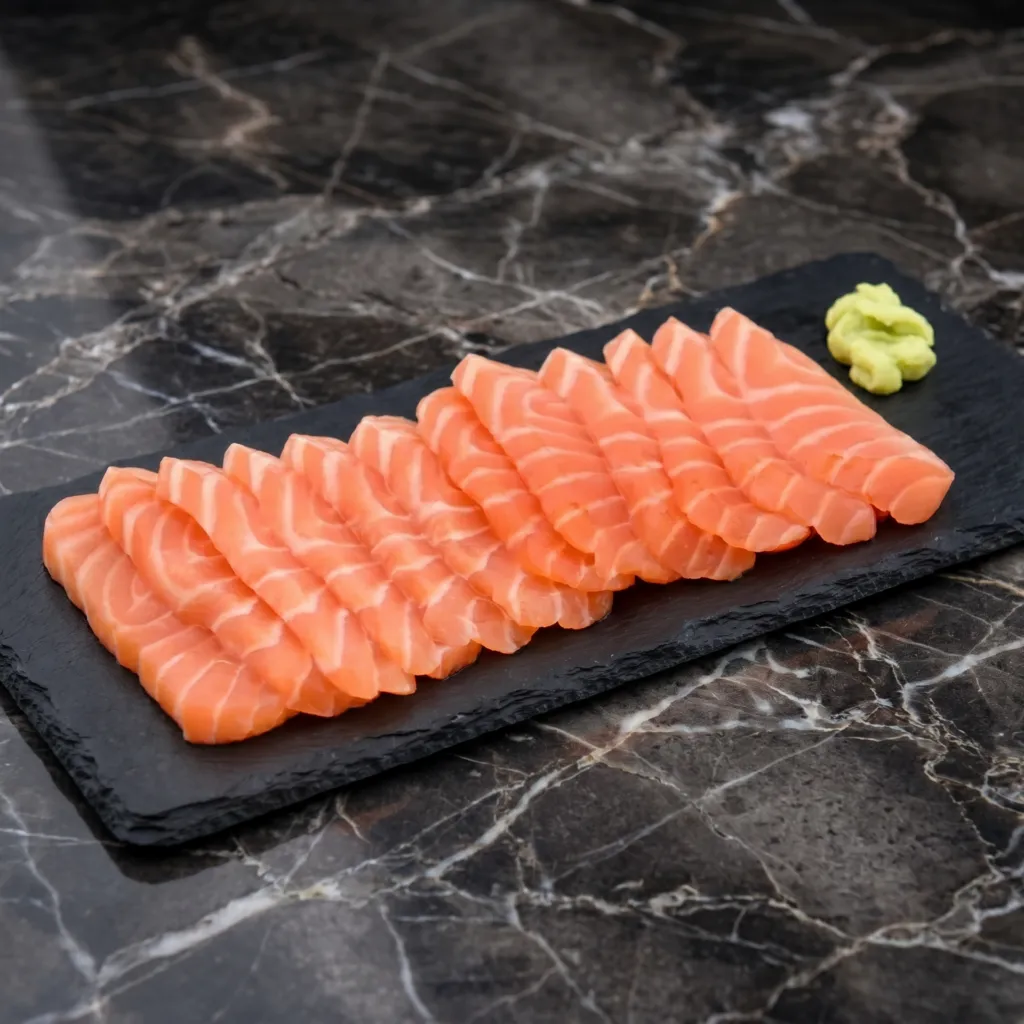
For salmon, use a slightly angled cut (about 45 degrees) to create more surface area and a more tender bite. Slice against the grain for the best texture. Pieces should be about ¼ inch thick.
Slice Yellowtail (Hamachi)
Hamachi is typically sliced similarly to tuna—perpendicular cuts about ¼ inch thick. The flesh is more delicate, so use a gentle touch.
Slice Scallops (Hotate)
If using large sea scallops, slice horizontally into ¼-inch thick rounds. If using small scallops, they can be served whole or halved.
Arrange the Sashimi
Arrange the sliced sashimi on a chilled platter. Traditional presentation is artful and minimalist—overlap slices slightly, vary colors and shapes, and leave negative space. Garnish with shiso leaves, shredded daikon, and fresh wasabi.
Serve Immediately
Serve the sashimi immediately with small dishes of soy sauce, pickled ginger, and wasabi on the side. Provide instructions: a little wasabi can be mixed into the soy sauce, or placed directly on the fish before dipping.
Pro-Tips for Sashimi Perfection
- Sashimi-Grade Is Non-Negotiable: Never use regular supermarket fish for sashimi. It must be specifically labeled for raw consumption.
- Keep Everything Cold: Fish should be kept refrigerated until just before slicing, and the serving platter should be chilled.
- Sharpen Your Knife: A truly sharp knife is essential—dull knives crush the flesh and ruin the texture. Learn to sharpen or have it professionally sharpened.
- One Smooth Motion: Slice in a single, smooth draw of the knife—no sawing back and forth.
- Wipe Between Cuts: A damp cloth wiped on the blade between cuts prevents sticking and ensures clean slices.
- Know Your Fish: Different fish have different textures and require different cutting techniques. Practice on less expensive fish first.
- Temperature Matters: Sashimi should be served slightly chilled, not ice-cold, to allow the flavors to develop.
- Fresh Wasabi: If you can find fresh wasabi root, grate it yourself—it’s a revelation compared to the prepared paste.
This Perfect Sashimi guide will have you slicing like a Japanese master in no time.