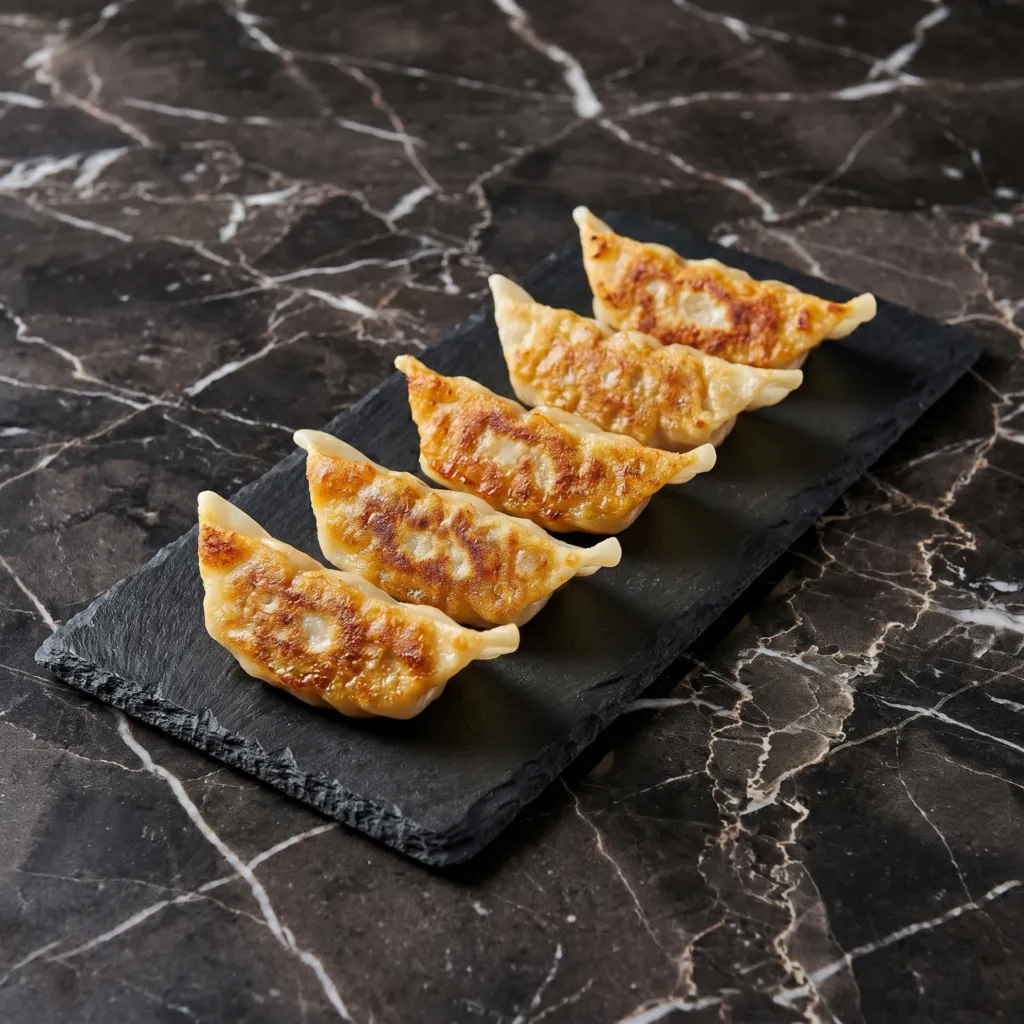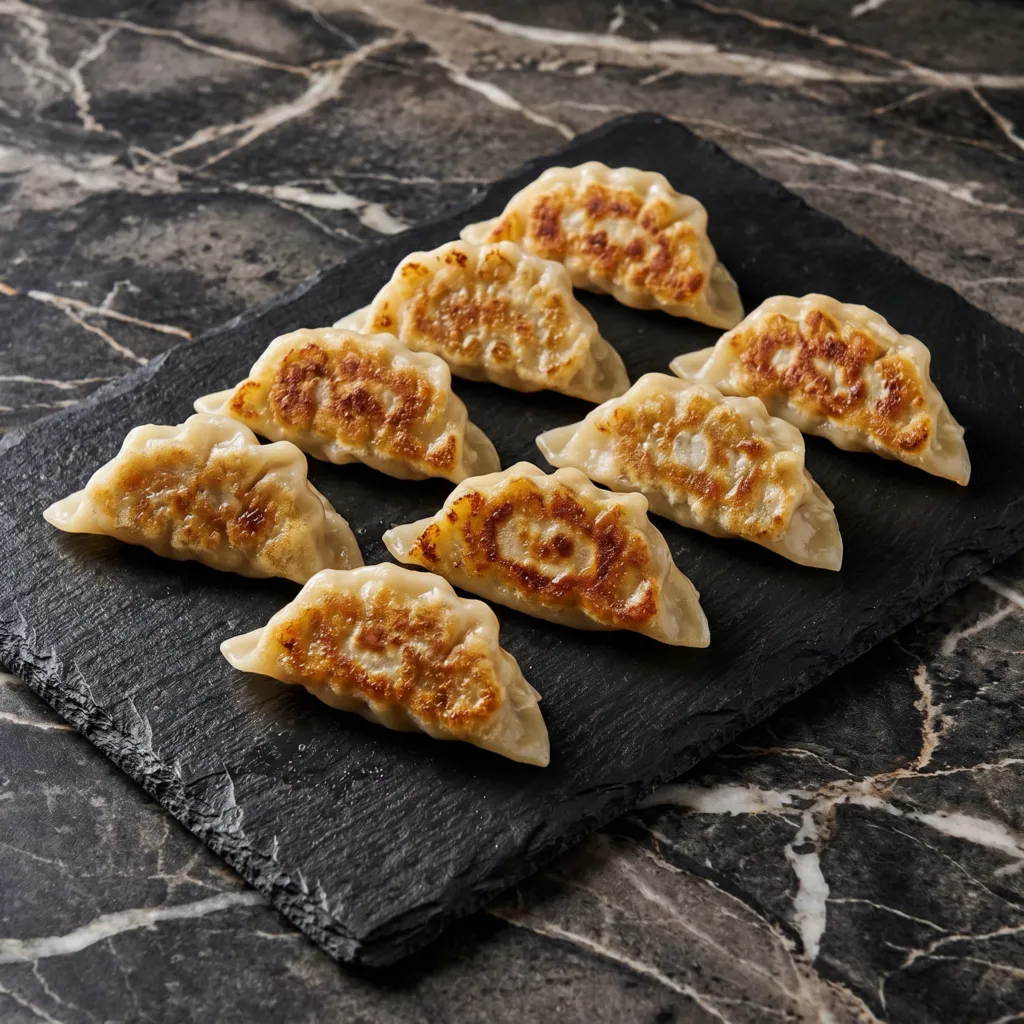
Gyoza are the perfect food. A thin, chewy wrapper envelops a juicy, savory filling of pork, cabbage, garlic, and ginger. They’re pan-fried to create a golden, crispy lace crust on the bottom while the top stays soft and tender. Steam finishes the cooking, ensuring the filling stays moist. Dip them in a simple sauce of soy sauce, rice vinegar, and chili oil, and you have a dish that’s impossible to stop eating. Yes, folding takes practice. No, they don’t have to be perfect. Make a big batch, freeze half, and thank yourself later.
The Science of the Crispy Lace Bottom & Why Cabbage Needs Salt
The signature gyoza crust comes from a starch slurry—a mixture of water, flour, and sometimes potato starch—that’s added to the pan during steaming. As the water evaporates, the starch left behind crisps into a golden, lacy network that fuses the dumplings together. This crust is the best part. The filling’s juiciness depends on cabbage preparation. Raw cabbage contains a lot of water. If added directly to the filling, that water will release during cooking, turning the interior soggy and causing the wrappers to tear. The solution: salt the shredded cabbage, let it sit for 15 minutes, then squeeze out the excess water. This removes moisture while keeping the cabbage’s texture and flavor. The pork fat provides juiciness—don’t use lean ground pork. The fat renders during cooking and bastes the filling from the inside.
Instructions
Prep the Cabbage
Finely shred the cabbage. Place it in a bowl, sprinkle with 1 teaspoon of salt, and toss to combine. Let sit for 15 minutes. This draws out excess moisture. After 15 minutes, squeeze handfuls of cabbage over the sink to remove as much liquid as possible. Use your hands—really squeeze. Transfer the squeezed cabbage to a clean bowl.
Make the Filling
To the squeezed cabbage, add the ground pork, chopped garlic chives (or green onions), minced garlic, grated ginger, soy sauce, sake, sesame oil, and white pepper. Mix vigorously with your hands or a spatula until the mixture becomes sticky and slightly paste-like. This kneading step is important—it develops the protein structure that keeps the filling moist and cohesive. The filling should be uniform, with no dry spots.
Set Up Your Folding Station
Lay out a clean, dry surface. Place the gyoza wrappers nearby (cover with a damp cloth to prevent drying). Put the filling in a bowl. Place a small bowl of water for sealing. Have a baking sheet lined with parchment paper ready for finished gyoza.
Fold the Gyoza
Hold a wrapper in your non-dominant hand. Place 1 teaspoon of filling in the center (don’t overfill). Dip your fingertip in water and moisten the outer half of the wrapper’s edge. Fold the wrapper in half over the filling, creating a half-moon. Press the edges together to seal, but leave the top edge open. With your thumbs and index fingers, create 4–6 pleats along one side, pressing each pleat against the flat side to seal. The finished dumpling should stand upright slightly on its flat bottom. Place on the parchment-lined baking sheet, pleat-side up, making sure dumplings don’t touch. Repeat with remaining wrappers.
Make the Dipping Sauce
In a small bowl, combine soy sauce, rice vinegar, chili oil, and sliced garlic (if using). Set aside.
Pan-Fry the Gyoza (First Batch)
Heat a large nonstick skillet or cast-iron pan over medium-high heat. Add 1 tablespoon of vegetable oil and swirl to coat. Carefully place gyoza in the pan, flat-bottom side down, in a single layer. Do not crowd—leave a little space between each dumpling. Fry for 2–3 minutes until the bottoms are golden-brown and crispy. Peek underneath to check.
Steam the Gyoza
Once the bottoms are golden, add ¼ cup of water to the pan (and ½ teaspoon flour if you want extra crispy lace). Cover immediately with a lid. Reduce heat to medium-low. Steam for 3–4 minutes until the water has mostly evaporated and the wrappers are translucent and cooked through.
Crisp the Bottoms (Final Step)
Remove the lid. Increase heat back to medium-high. Let any remaining water evaporate, then cook for another 30–60 seconds until the bottoms become dark golden-brown and extra crispy. The starch from the flour (if added) will create a lacy, crackling crust.
Serve
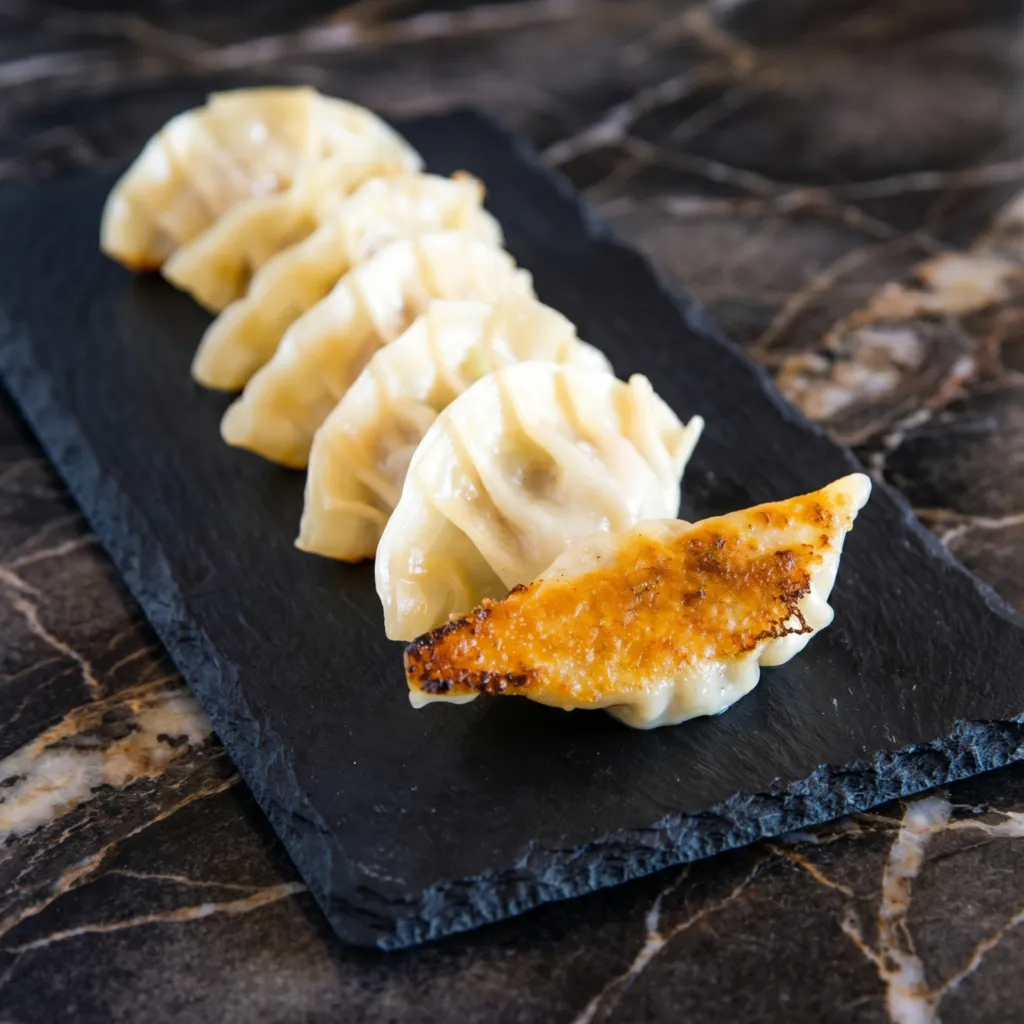
Carefully slide a spatula under the gyoza to release them. Invert the pan onto a plate to serve them bottom-side up (showing off the crispy crust) or transfer them directly. Serve immediately with the dipping sauce. Repeat with remaining gyoza or freeze the uncooked ones for later (see pro-tips).
Pro-Tips for Gyoza Greatness
- Squeeze the cabbage firmly: This is the most important step for juicy dumplings. Wet cabbage = soggy filling and broken wrappers. Don’t be shy.
- Knead the filling well: The mixture should feel sticky and almost paste-like. This binds the ingredients together and prevents the filling from crumbling.
- Don’t overfill the wrappers: 1 teaspoon is plenty. Overfilled dumplings burst during cooking and won’t seal properly.
- Keep wrappers covered: Gyoza wrappers dry out fast. Cover the stack with a damp paper towel while you work.
- Pleating takes practice: Your first few gyoza will be ugly. By dumpling #20, you’ll see improvement. By #40, you’ll be a pro. Ugly gyoza still taste amazing.
- Freeze uncooked gyoza: Place them on a parchment-lined baking sheet (not touching) and freeze until solid, then transfer to a freezer bag. Cook from frozen—add 1–2 minutes to the steam time.
- Don’t skip the starch slurry for extra crunch: Adding a little flour to the steaming water creates a lacy, crispy “wing” (hane) that connects the dumplings—this is how restaurants do it.
- Nonstick pan is your friend: Gyoza are sticky. A good nonstick skillet makes release much easier.
- Leftover gyoza: Reheat in a dry pan over medium heat—never microwave (makes them rubbery). These dumplings are a project, but a fun one. Make them with friends, make a mess, and eat standing over the pan. That’s the gyoza way.